Alaska in Winter: What to Expect and the Best Arctic Experiences
Planning Alaska in winter? Months compared, Fairbanks cold and daylight, northern lights, Arctic Circle drives and flights, packing, costs and 3- and 5-day itineraries.
Winter in Alaska is the season for the northern lights, snow, dog sledding and a guided trip up to the Arctic Circle, and Fairbanks is the practical base for all of it: aurora tours, winter activities and Dalton Highway excursions all leave from town. Alaska is enormous, though, and a Fairbanks winter is colder and darker than one in Anchorage, Seward or Juneau. Plan for deep cold, short days, possible travel disruption and outdoor plans that can move. Northern lights sightings are never guaranteed.
Check Availability
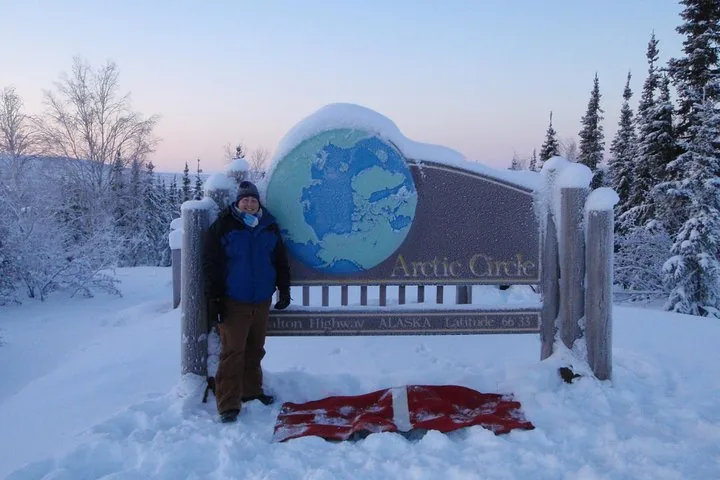
Arctic Circle Winter Drive Adventure
- 4.9/5 (160+ reviews)
- About 16 hours
- Operated by Northern Alaska Tour Company
Includes Professional driver-guide for the whole day · Live commentary on board about the road, the pipeline and life in the …
You'll choose your date and complete the booking on Viator.
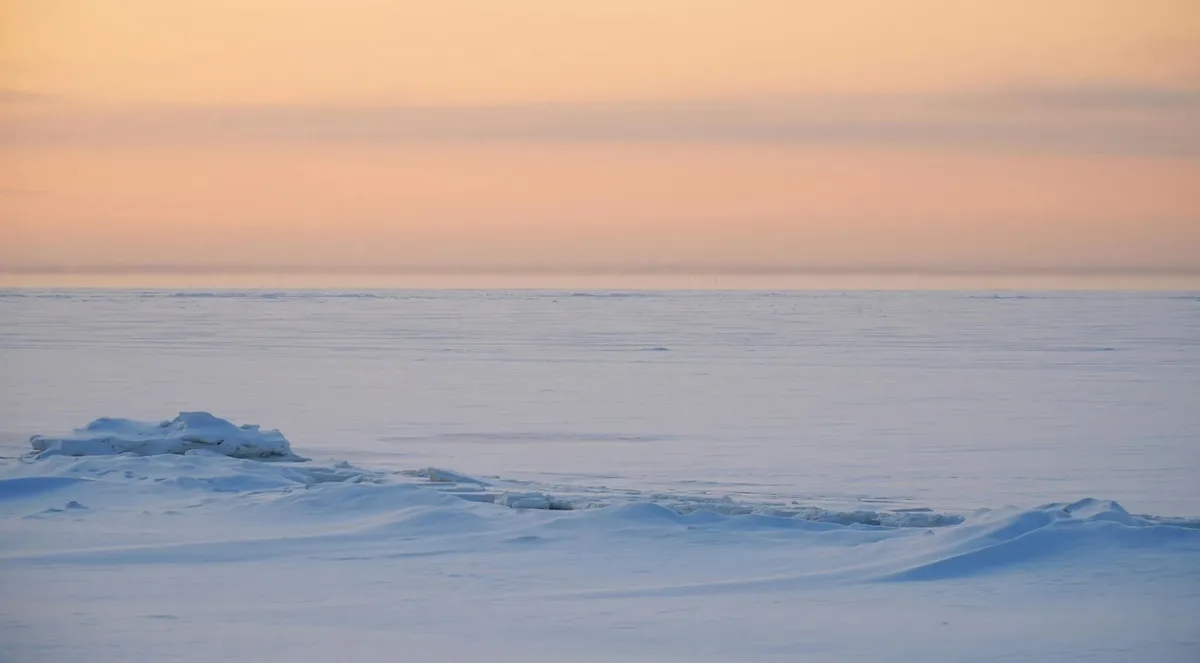
Who this guide is for: first-time winter visitors choosing when to go, how long to stay and whether to add an Arctic Circle trip from Fairbanks. It covers Interior and Arctic Alaska; the coast and the south of the state get only a mention.
Is Alaska worth visiting in winter?
Yes, if you want the things only winter gives you; the classic summer sightseeing trip is a different holiday. Fairbanks offers aurora viewing at night, dog mushing, snowmobiling, snowshoeing, ice fishing, seasonal ice art and trips above the Arctic Circle. Those are the reasons to come when it is cold and the days are short. Explore Fairbanks’ winter guide lists many of them.
Winter is a poor match if you want long sightseeing days in daylight, easy self-driving to remote places, summer hiking trails or visitor facilities that only open in summer. Conditions vary a lot across Alaska, so don’t plan a winter trip as a summer road trip with warmer clothes.
Alaska winter at a glance
| Topic | What to expect |
|---|---|
| Best base for aurora and Arctic Circle tours | Fairbanks |
| Main Fairbanks winter-activity period | Roughly mid-October to late March, according to Explore Fairbanks |
| Aurora season | Late August to April, on nights that are dark and clear enough |
| Daylight | Under four hours in Fairbanks at the December solstice; much longer by March |
| Typical trip length | 3 to 5 nights in Fairbanks to combine several aurora attempts with daytime activities |
| Getting to the Arctic Circle | A guided Dalton Highway drive or an operator-run flight |
| Biggest planning risks | Extreme cold, poor road conditions, weather-related flight or tour changes |
Winter is not one set of conditions. Late October, mid-January and late March can feel completely different, so check the forecast for your town and dates before you travel.
Other Experiences
Other experiences you might enjoy
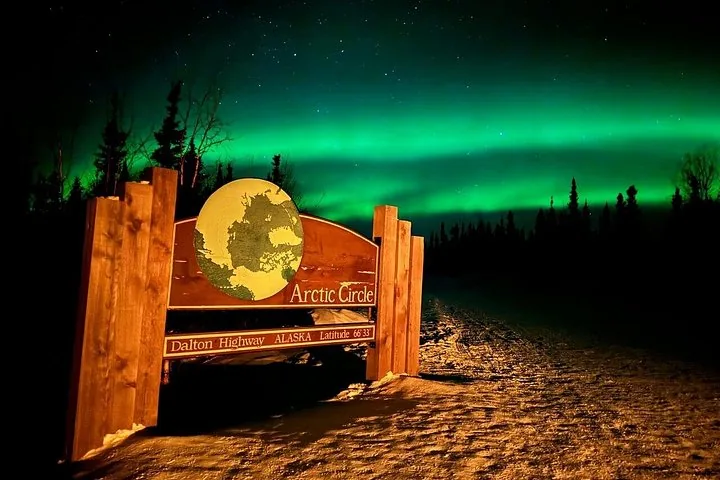
More winter trips from Fairbanks: aurora nights outside town, the Arctic Circle drive on the Dalton Highway, and tours that add the Yukon River crossing and an aurora watch on the way back.

When should you visit Alaska in winter?
October and November: Early winter atmosphere
In Fairbanks, cold weather and snow can arrive early, and the nights are already long enough for aurora viewing. October is a transition month: don’t assume every winter activity and trail opens on a fixed date. November usually looks properly wintry, with daylight shrinking fast.
Best for: travelers who want to go before the holiday peak and can live with changeable early-season conditions.
December: Long nights and holiday atmosphere
December has the longest dark hours in Interior Alaska, which gives you many hours to look for the aurora. A long night does not mean you will see it, because cloud and geomagnetic activity still matter, and weather can disrupt travel. Around the winter solstice, Fairbanks has under four hours of daylight.
Best for: short-day winter scenery, holiday travel, and travelers who don’t mind fitting daytime outings into a tight window.
January and February: Deep winter experiences
These months can bring bitter cold, deep snow and the strongest winter atmosphere in Fairbanks. Tours keep running, but clothing, transport and warm-up breaks matter more. February has more daylight than December, which makes it easier to fit a daytime excursion and an evening aurora outing into the same day.
Best for: dog sledding, winter scenery, snow activities, and visitors ready for demanding cold.
March: Aurora nights plus more daytime exploring
March is often the best compromise for a first winter trip: nights stay dark enough for the aurora while longer days leave room for tours and outdoor activities. Fairbanks is known for ice-art events in February and March, though the dates change from year to year.
Best for: a balanced trip with aurora tours, an Arctic Circle day, winter sports and daytime photography.
What about April?
Early April can still bring winter weather and aurora nights in Fairbanks, but the nights shorten quickly and leave less dark time to watch. Some winter tours run into April and others stop sooner: the Arctic Circle winter drives run to 21 April 2027 and the Northern Lights & Arctic Circle Tour to 29 April 2027. Check the exact operating dates.
Planning tip: if the aurora is your main goal, read our best time to see the northern lights in Alaska guide for the month-by-month breakdown, including the Fairbanks viewing calendar.
How cold is Alaska in winter?
There is no meaningful statewide winter temperature. Fairbanks, Anchorage and Arctic Alaska have different climates, and temperatures swing widely within a single month. Interior Alaska can have dangerous cold spells well below zero Fahrenheit, and wind makes exposed places much harsher, especially farther north.
For planning:
- Check the National Weather Service forecast for the exact community and dates; a statewide average tells you little.
- Ask each operator which cold-weather clothing is included, if any.
- Build in warm indoor breaks, particularly when you photograph the aurora at night.
- Treat frostbite and hypothermia as real hazards: exposed skin can freeze within minutes in deep cold and wind.
- Expect a remote Arctic Circle stop to be colder than Fairbanks on the same day.
A guided tour takes care of the logistics, but you are still outside in the cold, and departures can still be cancelled. Our what to wear guide covers the layers.
Best things to do in Alaska in winter: Fairbanks and Arctic Alaska
1. Watch the Northern Lights near Fairbanks
The aurora is the main reason many visitors plan a Fairbanks winter trip. Tours take you away from city lights, either to a heated viewing base or on a drive between possible viewing spots. A fixed lodge is more comfortable; a mobile tour can move away from cloud.
Our picks: the Aurora Viewing - Aurora Husky Lodge ($136, 5 hours, 4.6/5 from over 300+ reviews) watches from a ridge-top lodge, and the Electric Moose Studios Aurora Adventure ($308, 6 hours, 5.0/5 from over 240+ reviews) adds portraits and hot pizza.
How to plan it: book more than one night, watch the weather and aurora forecasts, and don’t put your only aurora attempt right before an early flight. No operator can guarantee a sighting.
Related guide: Fairbanks northern lights: best places and tours.
2. Cross the Arctic Circle on a guided winter road trip
The most distinctive winter trip from Fairbanks goes north on the Dalton Highway, which runs 414 miles from Livengood to Deadhorse. The road is open year-round, but the Alaska Department of Transportation warns of rough surfaces, very few services, snow, ice and hazardous driving. Standard rental agreements often ban the Dalton. See the Alaska DOT Dalton Highway page.
On an Arctic Circle day tour you get the journey and the crossing of the line, with stops for the Trans-Alaska Pipeline, the Yukon River and the remote landscape. The drive is long. Northern Alaska Tour Company’s Arctic Circle Winter Drive Adventure leaves at 9:45 a.m. and returns between 1:00 and 2:00 a.m., about 15 to 16 hours. On Viator it sells as the Arctic Circle Winter Drive Adventure ($309, 4.9/5 from over 160+ reviews), with check-in at the company’s East Ramp office at Fairbanks airport and no hotel pickup. Route, length and departures depend on the operator and the weather.
Who should consider it: travelers who want the Arctic without arranging a suitable vehicle and driving the Dalton themselves. Skip it if you strongly dislike long road journeys.
Explore further: how to visit the Arctic Circle from Fairbanks, our Dalton Highway driving guide and the winter Arctic Circle tours running this season.
3. Take an Arctic Circle flightseeing trip
A winter flight shows you Interior and Arctic Alaska from above. Depending on the itinerary, a flight can cross the Arctic Circle, land in the region and include a short ground visit around Coldfoot. These are daytime scenic trips, not northern lights flights.
Northern Alaska Tour Company’s Arctic Circle Winter Air Adventure is a flight of about four hours leaving at 1:00 p.m., from $649 ($689 in March 2027), booked direct; no Viator or GetYourGuide listing sells it. You cross the Circle by air and do not stand at the sign. Schedules and fares can change, and any flight depends on the weather.
Who should consider it: visitors who want an Arctic Circle crossing without spending most of a day on a winter highway.
4. Try dog sledding or meet a dog-mushing team
Dog mushing is part of Alaska’s winter culture. Around Fairbanks you can choose a short ride, a hands-on kennel visit or a longer outing. Ask about the activity level, the clothing provided, age limits, how the dogs are cared for, and whether you ride as a passenger or drive the team.
Our pick: the Fairbanks: 1-Hour Alaskan Winter Dog Sledding Adventure on GetYourGuide, rated 4.9/5 from over 190+ reviews, is a short snow ride that fits around other plans.
A morning or early-afternoon sled ride pairs well with an evening aurora trip, as long as you leave time to rest in between.
5. Visit Chena Hot Springs
A hot soak is a popular contrast to the cold outside. Chena Hot Springs, about 60 miles from Fairbanks by road and 1.5 to 2 hours’ drive, is one of the most common excursions from town, and some tours combine it with the Aurora Ice Museum and an evening aurora watch. The Fairbanks: Northern Lights & Chena Hot Springs Tour on GetYourGuide (4.5/5 from over 170+ reviews, about 10 hours) does all three.
Before booking, check what the ticket includes, the pickup arrangements and the age rules: at the resort, the outdoor hot springs lake is for guests 18 and over, while the indoor pool is open to all ages (Chena Hot Springs Resort). A hot springs trip does not guarantee the northern lights.
6. Enjoy snowmobiling, ice fishing, and snowshoeing
Snowmobile outings are an active way to explore trails and winter scenery, subject to snow and the operator’s rules. Ice-fishing trips usually supply the gear and show you how, often from a heated shelter. Snowshoeing is the quiet option, as long as the route is safe and you are dressed for it.
Choose by fitness, how well you handle cold and the time you have. Don’t stack several demanding winter activities in front of a late-night aurora outing if you will be exhausted.
7. See Fairbanks’ winter ice art
Fairbanks has a strong ice-sculpture tradition, and its events and displays are mostly in late winter. If ice art is a priority, check event dates and tickets for your travel year; not every display is open all winter.
8. Visit North Pole, Alaska
North Pole is a small town near Fairbanks known for its Santa-themed attractions. It is an easy extra stop for families or anyone after a festive outing. Despite the name, North Pole, Alaska is neither at the geographic North Pole nor on the Arctic Circle. Our day trips from Fairbanks guide compares it with the longer outings.
Which Arctic experience should you book?
| Experience | Approximate time | Best for | Key limitation |
|---|---|---|---|
| Fairbanks evening aurora tour | Evening to late night; varies | Visitors who put the northern lights first | Sighting never guaranteed |
| Arctic Circle winter driving tour | 15 to 18 hours | The road trip and crossing the Circle | Long hours and winter road conditions |
| Arctic Circle winter flightseeing | About 4 hours | Arctic scenery with no road time | Weather-related flight changes |
| Coldfoot overnight or fly-drive trip | Usually 2 days or more | A fuller trip into the remote Arctic | More time and a bigger budget |
| Chena Hot Springs outing | Half or full day; varies | Relaxation and winter scenery | Not an Arctic Circle trip |
Real operator examples to compare
These are listings running in winter 2026–27. They show what you can book; seats on your date still need checking.
- Arctic Circle Winter Drive Adventure: $309 on Viator, about 16 hours from the East Ramp office at Fairbanks airport, on Viator’s calendar from 22 October 2026 to 21 April 2027. Booked direct with Northern Alaska Tour Company it costs $299 to $339 depending on the date, on Sundays, Tuesdays and Fridays from 19 September 2026 to 21 April 2027.
- Northern Lights & Arctic Circle Tour: $363, 12 to 14 hours, 4.6/5 from over 990+ reviews, with hotel pickup in Fairbanks for a 2:00 p.m. departure, so the drive home runs through the dark hours. It runs daily to 29 April 2027.
- Arctic Circle Aurora Drive Adventure: $369, 18 to 19 hours, 4.6/5 from over 30 reviews, the winter drive with an aurora watch added on the way back.
- Arctic Circle Winter Air Adventure: the four-hour flight above, from $649, booked direct with Northern Alaska Tour Company.
For a side-by-side of every format, including the fly-drive trips to Coldfoot, see which Arctic Circle tour to book.
Should you drive the Dalton Highway yourself in winter?
For most first-time winter visitors, a guided trip is the easier choice. The Dalton is an industrial supply road with few services, and conditions can turn quickly. Heavy trucks share the highway, and rental agreements may forbid it even if you can physically drive there. Our Dalton Highway in winter guide covers road conditions, closures and what to pack.
The Alaska Department of Transportation advises a reliable, properly equipped vehicle, emergency supplies, spare tires, extra fuel and an understanding of remote road conditions. The Bureau of Land Management confirms that the highway and some private services stay open in winter but warns of ice, blowing snow and difficult driving. Check Alaska 511 and the weather forecast before you go; a road report describes conditions at one moment and does not promise they still hold.
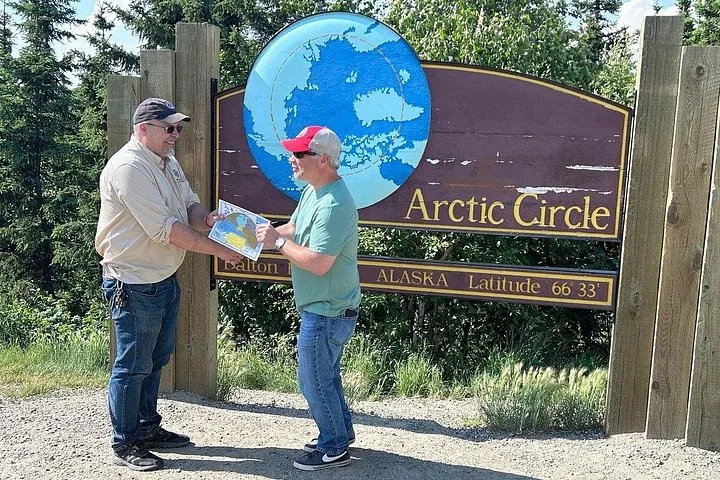
Guided tours can also be rerouted, delayed or cancelled in severe weather. If standing at the Arctic Circle sign is the point of your trip, confirm that your itinerary stops there and ask about the operator’s bad-weather policy. Our self-drive vs tour guide sets out the costs of each.
What to pack for Alaska in winter
Pack adjustable layers, not one giant coat. What you need depends on the activity and the operator, but this list is a good start:
- Base layers that move moisture away (no cotton next to the skin)
- A warm mid-layer of fleece or wool
- Windproof, insulated outerwear suited to the forecast
- Insulated winter boots and thermal socks
- A warm hat and face or neck protection
- Insulated mittens or gloves, plus thin liner gloves
- Hand and foot warmers as extras
- Lip balm, moisturizer, sunglasses and sun protection
- Camera batteries and a power bank, kept warm and dry
- Medication, water, snacks and essentials for long excursion days
On an overnight trip or a winter road tour, ask whether the operator lends an extreme-cold parka, boots or other specialist kit. Clothing that is fine for short outdoor stops is not always enough for a long photography session in very low temperatures.
Getting around in winter: flights, hotels and excursions
Fairbanks is the simplest starting point for every trip in this guide. Choose a hotel with late-night tour pickups and the airport transfer in mind, and check whether your tour collects you at the hotel, from a central stop or from an office near the airport. Our where to stay in Fairbanks page compares the areas, and our guide to where to stay to see the northern lights covers lodges, cabins and glass igloos outside town.
Weather can disrupt winter flights and remote excursions. Leave slack in your connections, especially when an Arctic trip is the highlight of your holiday. On a one- or two-night stay, pick the experiences you would most regret missing and drop the rest.
Sample 3-day Fairbanks winter itinerary
Day 1: Arrive and settle in. Check the weather, collect any cold-weather gear, look around central Fairbanks, and take a guided aurora outing in the evening if you feel rested.
Day 2: Winter activity and a second aurora chance. Choose dog sledding, Chena Hot Springs or a gentler local outing. Keep the evening for another northern lights attempt if conditions allow.
Day 3: Arctic Circle trip. If you take a Dalton Highway tour, keep the rest of the day free: the winter drives last 15 hours or more. A flightseeing trip suits travelers with less time, but leave room for weather delays.
Better with extra time: add at least one more night in Fairbanks. It takes the pressure off a single clear sky or a single weather-dependent departure.
Sample 5-day winter itinerary
| Day | Focus | Notes |
|---|---|---|
| 1 | Arrive in Fairbanks | Easy afternoon, evening aurora option |
| 2 | Dog sledding and local winter sights | Allow time to warm up and rest |
| 3 | Arctic Circle drive or flightseeing | Keep the schedule flexible |
| 4 | Chena Hot Springs or ice fishing | Second or third aurora attempt |
| 5 | Spare time and departure | Use it for weather-related changes if needed |
For a fuller planning framework, read our Alaska northern lights trip planner.
How much does an Alaska winter trip cost?
Costs depend on flights, lodging, activities, dates and whether you choose simple local outings or an Arctic flight. The price of one tour is not the price of the holiday. Budget separately for:
- Flights to and from Fairbanks, including time for connections.
- Accommodation and late-night transfers.
- Meals and cold-weather clothing or rentals.
- Aurora trips, an Arctic Circle excursion and any winter sports.
- A reserve for schedule changes.
For 2026–27, Northern Alaska Tour Company lists its Arctic Circle Winter Drive Adventure at $299 to $339 per person direct ($309 on Viator) and its Winter Air Adventure at $649 per person, $689 in March 2027. Each page lists its own inclusions and exclusions, and prices can change, so confirm taxes, transport and meals at checkout.
Common mistakes to avoid
- Booking only one night for the aurora. Cloud can hide strong activity, even in the best months.
- Expecting 24-hour darkness all winter. Daylight changes a lot between December and March and depends on latitude.
- Assuming the Arctic Circle guarantees the aurora. Crossing the Circle is a geographical milestone, not an aurora forecast.
- Taking an ordinary rental car on the Dalton without permission. Many agreements exclude this highway.
- Following a late-night tour with a demanding full-day trip. Allow for sleep, fatigue and time in the cold.
- Treating Alaska as one winter climate. Conditions differ sharply by region and elevation.
- Leaving no weather backup. Remote transport and flightseeing depend heavily on conditions.
Frequently asked questions about Alaska in winter
Is winter a good time to visit Alaska?
Yes, especially for the northern lights, snow activities and Arctic trips from Fairbanks. It suits you less if you mainly want summer-style road trips or long days of hiking in daylight.
What is the best winter month to visit Fairbanks?
March combines longer days with dark aurora nights. December has the longest nights, and January and February bring the deepest winter atmosphere. Pick by your priorities and how much cold you can take.
Can you see the Northern Lights in December in Alaska?
Yes, from dark places when the sky is clear and geomagnetic activity is up. The long nights give you more time to look, but there is no guarantee.
Is Alaska too cold in January?
Not necessarily, but Interior Alaska can be extremely cold, so plan your clothing and activities carefully. Check the actual forecast and the operator’s requirements before you go; averages hide the cold spells.
Can you visit the Arctic Circle in Alaska in winter?
Yes. Winter road and air trips leave Fairbanks on set schedules; the winter drives run to 21 April 2027. The Dalton Highway is open year-round, but weather can seriously disrupt it.
Can you drive from Fairbanks to the Arctic Circle yourself in winter?
Experienced, prepared drivers with a suitable vehicle and a rental agreement that allows it can do it, but it is hard and needs serious emergency planning. A guided tour is usually more practical for first-time visitors.
Is the Arctic Circle a good place to see the Northern Lights?
Remote Arctic places have very dark skies, but you still need clear weather, darkness and geomagnetic activity. Going farther north does not mean you will see the lights on a given night.
Are winter Arctic Circle tours available every day?
Not always. Northern Alaska Tour Company’s winter drive runs on Sundays, Tuesdays and Fridays, while the Northern Lights & Arctic Circle Tour runs daily. Some departures need a minimum number of passengers, and weather and road conditions can change or cancel them.
Can children take winter Arctic Circle tours?
Policies vary by tour. Northern Alaska Tour Company’s winter drive page sets no minimum age, but the day runs from a 9:00 a.m. check-in to a return around 1:00 to 2:00 a.m., which is very long for young children. Check the terms of the exact listing and think about how your children cope with long hours in a vehicle.
Is Chena Hot Springs inside the Arctic Circle?
No. Chena Hot Springs is an outing east of Fairbanks and never crosses the Arctic Circle. The two are different trips and fit well on separate days of a longer stay.
How many days do you need in Fairbanks in winter?
Three nights is a sensible minimum for a short trip; four or five nights give you more room for aurora weather, an Arctic Circle excursion and winter activities.
Do I need an aurora tour to see the Northern Lights?
No. You can sometimes see the aurora on your own from a dark, safe spot. A guided tour helps with transport, local knowledge and warmth, but cannot guarantee a display.
The bottom line
Alaska in winter works best when you plan for the season. Base yourself in Fairbanks for several nights, give yourself repeated chances at the northern lights, choose one big Arctic experience and leave room for weather changes. If reaching the Arctic Circle is the goal, a guided winter drive or a flight is far easier to manage than driving the Dalton Highway yourself.
Plan your next step: compare Arctic Circle tours from Fairbanks, read up on the Fairbanks to Arctic Circle route, and pick the best month for the northern lights in Alaska.
Sources and fact-checking references
Checked November 2026. Operator schedules, policies and prices can change.
- Explore Fairbanks: Winter Season: seasonal activities and ice art.
- Alaska Department of Transportation: Dalton Highway: highway length, surface, year-round access and road safety.
- Alaska DOT: Dalton Highway Maintenance: road conditions and Alaska 511.
- Bureau of Land Management: Dalton Highway FAQs: year-round access and seasonal visitor facilities.
- Northern Alaska Tour Company: Arctic Circle Winter Drive Adventure: 2026–27 dates, departure days, times and rates.
- Northern Alaska Tour Company: Arctic Circle Winter Air Adventure: winter flight schedule and fares.
- Chena Hot Springs Resort: Pool House: age rules for the lake and indoor pool.
- National Weather Service: local forecasts and cold advisories.
- Alaska 511: current road advisories; reports can lag real conditions.
Stand at 66°33′ North This Season
A day on the Dalton Highway, the Arctic Circle sign after dark and a watch for the aurora on the long drive home.
Check Availability & Book