Alaska Northern Lights Trip: How to Plan Your First Aurora Trip
Plan a first Alaska northern lights trip: when to go, how many nights in Fairbanks, 3, 5 and 7 day plans, what it costs, where to stay and whether to add the Arctic Circle.
For a first Alaska northern lights trip, base yourself in Fairbanks for at least three nights between 21 August and 21 April, book one or two guided aurora nights, and keep other evenings free in case cloud spoils your plans. September and March give you dark skies and, on average, milder nights than December to February. Add an Arctic Circle trip from Fairbanks if you also want to see the far north by road. No tour or itinerary can promise the aurora.
Check Availability
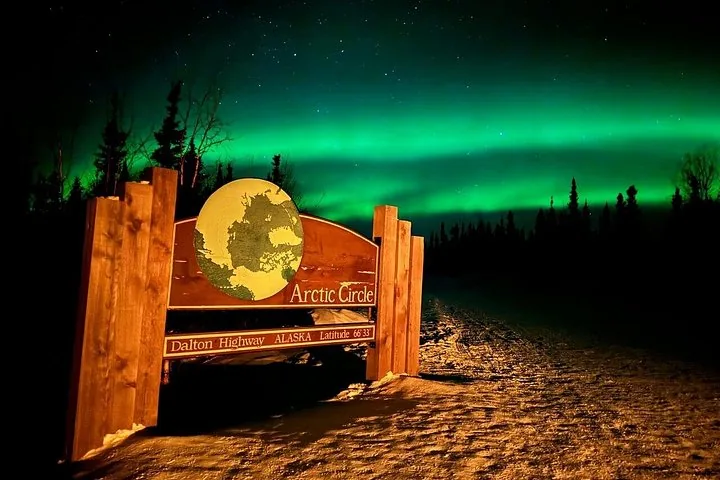
Northern Lights & Arctic Circle Tour
- 4.6/5 (990+ reviews)
- 12 to 14 hours
- Operated by Alaska Wild Lights
Includes Driver-guide from Alaska Wild Lights · Hotel pickup and drop-off within Fairbanks city limits · Personalized Arctic …
You'll choose your date and complete the booking on Viator.
The aurora needs solar activity, darkness and a clear sky all at once, so leave room in your trip for a bad night. Below are where to go, how many nights to allow, what to book, what it costs and when an Arctic Circle crossing fits in.
Alaska northern lights trip at a glance
| Planning question | What to do |
|---|---|
| Base for a first trip | Fairbanks |
| Viewing season around Fairbanks | 21 August to 21 April |
| Months to look at first | September and March; December to February for deep winter |
| Shortest stay that makes sense | Three nights; four or five give you more chances |
| How to plan the nights | One or two guided nights plus free nights you can use if the sky clears |
| Hours to be outside | Late evening to early morning, best around midnight |
| Arctic add-on | A guided Arctic Circle road trip, or a longer trip to Coldfoot |
| Biggest mistake | Booking one aurora night, or expecting a sure sighting |
Explore Fairbanks says travelers who stay at least three nights and go out looking have a better than 90 percent chance of seeing the aurora. That is an average across the season, not a promise for your dates.
Why Fairbanks is the best starting point
Fairbanks sits under the auroral oval, the band around the pole where the aurora appears most often. Being inland, it often gets different cloud from the Alaska coast. For a first visit it also has hotels, flights, guides and a wide choice of short and long aurora trips.
You can spend an evening at a heated lodge, follow a guide to darker ground, or travel north on the Elliott and Dalton highways toward the Arctic Circle. Some visitors stay in Fairbanks for the whole trip; others add a night or two farther north.
Anchorage is an easy place to fly into and has plenty to do, and the aurora does show there in the right conditions. If the northern lights are the main reason for your trip, though, spending every night in Anchorage instead of going on to Fairbanks gives you fewer good chances.
For a place-by-place comparison, read where to see the northern lights in Alaska. For viewing spots and tours around town, read our Fairbanks northern lights guide.
Other Experiences
Other experiences you might enjoy
Aurora nights and Arctic Circle drives from Fairbanks for the rest of your trip, from five-hour lodge evenings near town to day-long trips up the Dalton Highway.

When should you go to Alaska for the northern lights?
The Fairbanks aurora season runs from 21 August to 21 April, when the nights are dark enough to see it. The aurora happens all year; from late April to mid-August the sky stays too bright.
| Travel period | What you get | Trade-off |
|---|---|---|
| Late August to September | Darkness returning, fall color, a chance of reflections on lakes | Early-season nights can still be short |
| October to November | Longer nights as winter sets in | Weather and snow vary a lot |
| December to February | The longest dark nights, snow and winter activities | Very low temperatures and short days |
| March to early April | Dark evenings, snow activities, more daylight and often less cold than midwinter | Popular dates fill early |
| Late April to mid-August | Midnight sun and summer trips | Too light for an aurora trip from Fairbanks |
The University of Alaska Fairbanks Geophysical Institute says the aurora is more active around the March and September equinoxes. That does not make every equinox night better than every winter night, because you still need a clear sky.
If you prefer fall scenery, look at mid-September to early October. For snow with lengthening days, look at late February to March. Pick December or January if snow and winter activities matter to you as much as the aurora. Our Alaska northern lights season guide goes month by month.
How many days do you need?
Three nights is a sensible minimum, and four to five give you more room. One clear night can bring a display you will never forget, but one cloudy night can wipe out a one-night visit, and forecasts change. Give yourself several chances.
A three-night trip
- Day 1: arrive in Fairbanks, settle in and rest, then join a guided aurora night if your flight gets in early enough.
- Day 2: see Fairbanks at an easy pace and keep the evening for a second try.
- Day 3: book a daytime activity, check the cloud forecast, then go back to a viewing spot or join another tour.
- Day 4: fly home, ideally not on an early flight straight after a late night.
It is simple to plan. You cannot fit a long Arctic Circle drive, the town’s sights and several late nights into it without rushing.
A five-day trip for most first-timers
- Day 1: arrive and get your bearings. Check the forecast, pick a safe viewing spot and do not overdo it after a long flight.
- Day 2: see Fairbanks, eat early and join a tour that drives you to darker ground or a heated viewing base.
- Day 3: take a guided day trip up the Dalton Highway to the Arctic Circle. If it gets back very late, keep the next morning free.
- Day 4: try a winter activity, a museum or Chena Hot Springs, then check the sky again.
- Day 5: fly home, with a buffer after your last late night.
Arctic Circle tours from Fairbanks run 12 to 19 hours, and the ones that watch for the aurora on the way back return well after midnight. Read the pickup, return and meal details before booking another tour for the next morning.
A seven-day trip with time farther north
With a week you can split your nights between Fairbanks and somewhere remote such as Coldfoot, if you can get transport and a room. A sensible split is three or four nights in Fairbanks, one or two in the Arctic and a last night in Fairbanks before your flight. A remote stay gives you different scenery; it does not change the odds on the weather or the aurora.
For the Arctic side of the trip, read our guide to visiting the Arctic Circle from Fairbanks.
Best ways to see the northern lights
A guided aurora chase
A guide does the late-night driving and changes the plan around the clouds. This suits first-timers, especially anyone nervous about icy roads. Ask how far the tour will drive, whether it stays in one place or moves around, and what happens if the sky stays cloudy.
A heated lodge or cabin
A lodge gives you shelter, often a bathroom and somewhere to warm up between looks outside. It suits families and anyone who does not want to stand in the cold all night. Because it stays in one place, you lose out if cloud sits over the lodge.
Watching on your own near Fairbanks
Creamer’s Field, Cleary Summit, Murphy Dome, Chena Lake and stretches of Chena Hot Springs Road are the usual spots. Some are easy to reach; others mean remote, high or icy roads. Check the weather, the parking and your vehicle, and never stop in a traffic lane or block a driveway.
An Arctic Circle and Dalton Highway trip
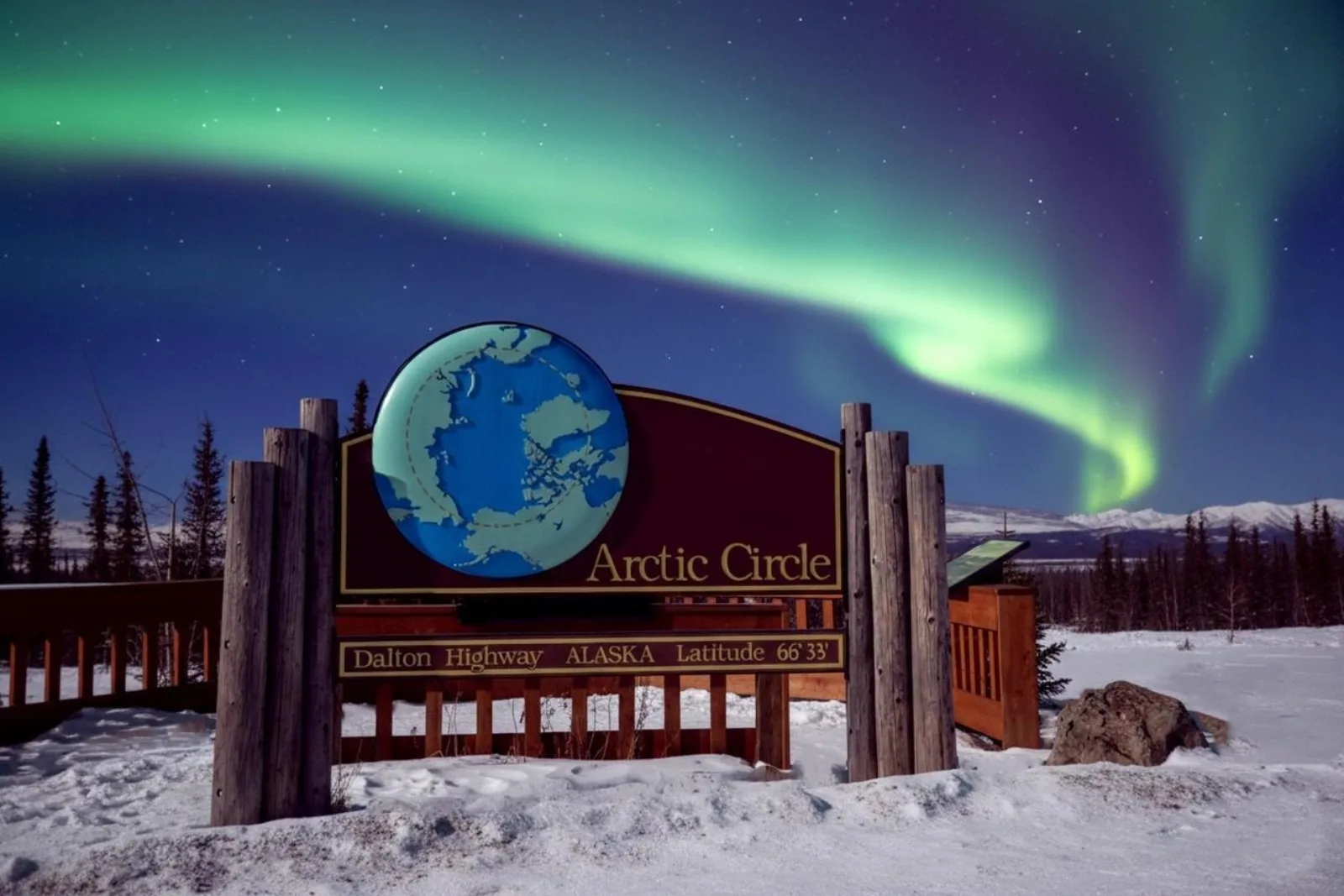
This is as much a sightseeing trip into Arctic Alaska as an aurora night. A guided trip passes the Trans-Alaska Pipeline, crosses the Yukon River, follows the Dalton Highway and stops at the Arctic Circle sign. Tours timed to come back after dark give you a chance to look for the aurora on the drive home.
Book it for the road and the crossing; driving farther north does not bring a stronger display. Our comparison of Arctic Circle tours and Dalton Highway guide cover the options.
Northern lights and Arctic Circle tours to book
These are live Viator listings, and none is sure to run on your dates. Check the season, current price, pickup area, refund terms and availability on the listing before you pay.
| Experience | Suits | What to check | Our pick on Viator |
|---|---|---|---|
| Heated lodge evening | A warm first night | About five hours, hotel pickup, hot drinks, photos extra; free cancellation | Aurora Husky Lodge, $136, 4.6/5 from 300+ reviews |
| Photography night with a warming shelter | Photos of you under the aurora | Six hours, small group, album and timelapse included; a free repeat night if you get no aurora photos, subject to seats | Electric Moose Studios Aurora Adventure, $308, 5.0/5 from 240+ reviews |
| Aurora chase | Moving with the clouds | Five to six hours; all sales final; a small review count | Aurora Chaser Tour, $161, 4.5/5 from 28 reviews |
| Arctic Circle and aurora day | The sign plus a night-sky search | 14 hours, late return, pickup at major hotels, no children under 5 | Northern Lights and Arctic Circle Trip from Fairbanks, $330, 4.6/5 from 180+ reviews |
| Arctic Circle afternoon and night | The Dalton by day and the aurora watch on the way back | 12 to 14 hours, 2 p.m. hotel pickup inside city limits, refund terms at checkout | Northern Lights & Arctic Circle Tour, $363, 4.6/5 from 990+ reviews |
For a first trip, the Husky Lodge evening is the cheapest way to spend one sure night outside, at $136. Choose the $308 Electric Moose night instead if you want photos of yourself under the sky. If you want the Arctic Circle too, the $363 afternoon tour has far more reviews than any other trip here. Our northern lights tours page lists the rest, and our Fairbanks guide helps you compare Fairbanks and Arctic Circle aurora tours by length, cost and comfort.
How much does an Alaska northern lights trip cost?
The total depends on your flights, your hotel, whether you rent a car, the season and how many tours you book. Build your own quote from these parts instead of trusting a package headline:
| Expense | What changes the cost |
|---|---|
| Flights | Where you fly from, connections and holiday demand |
| Accommodation | Number of nights, room type, location and season |
| Getting around | A rental car fit for winter, or hotel pickups and taxis |
| Aurora tours | From $136 for a lodge evening to $308 for a photography night |
| Arctic Circle trip | From $330 for a road day with aurora watching; fly-drives cost more |
| Meals | Restaurants, tour snacks and food for long days |
| Cold-weather clothing | What you own already, or renting and buying gear |
| Spare money | Weather delays, extra airport transfers and changed plans |
To price it, add flights, four nights in a hotel, two aurora nights, one Arctic Circle trip, and meals and transfers. Then price a five-night version. The extra night buys you another chance at a clear sky, but it does not buy a sighting.
Before booking, check whether tips, warm clothing, meals, hotel pickup, photos and taxes are included. On a 14-hour tour, whether food is included affects your day as much as the price does.
Where should you stay in Fairbanks?
On a first trip, a hotel in town is usually easiest, because most aurora and Arctic Circle tours pick up from Fairbanks hotels. Staying outside town gives you darker skies, but you may need a rental car, a transfer or a drive to a meeting hotel.
Ask these questions before you pay:
- Does the hotel offer aurora wake-up calls?
- Is it inside your tour’s pickup area?
- Can you get to restaurants and shops without driving at night?
- Can you reach a clear viewing spot safely if the sky clears?
- If you land after midnight, is late check-in confirmed?
In town, Pike’s Waterfront Lodge on the Chena River has a glass-roofed Aurora Conservatory where you can watch from indoors. Outside town, Aurora Villa is a guesthouse built for watching the sky, with dimmed outdoor lighting and keypad entry, but no tour on this site lists it as a pickup point, so plan on a car. A remote lodge can be lovely, but do not assume an aurora tour will collect you from a rural cabin or a private rental. Our where to stay in Fairbanks guide covers the pickup zones and the hotels in them, or you can see all stays in Fairbanks. For watching from your room, see our guide to aurora lodges and cabins around Cleary Summit and Chena Hot Springs Road.
What to pack for a northern lights trip
You will be outside late at night and standing still for long stretches. Dress for the forecast at the hours you will be out, not the daytime temperature.
- Thermal base layers that wick sweat, and warm mid-layers
- An insulated outer layer, with a windproof shell when it is windy
- A warm hat, a neck warmer and mittens or layered gloves
- Insulated winter boots with grip for snow and ice
- Spare warm socks and hand warmers
- Phone and camera batteries, kept warm in an inside pocket until you need them
- A small flashlight or headlamp, used sparingly at viewing spots
- Water and snacks for long tours
- Any medication or essentials you cannot replace on the road
Not every tour lends you cold-weather gear, so check what yours supplies. Winter nights can be dangerously cold, and frostbite is a real risk when you stand still for hours. Our what to wear guide covers each month.
Photographing the aurora without complicating your trip
A recent smartphone with a night mode can record a strong display. With a camera you can set yourself, use a tripod, a wide lens, a fairly open aperture and short to moderate exposures. A fast-moving aurora blurs on long exposures.
Take a test shot and adjust for brightness. Carry charged spare batteries, let your gear warm up slowly in a bag when you come inside so it does not fog, and spend most of the time looking up. The best movement can last only moments.
Checking the forecast the right way
Use two kinds of forecast together:
- Aurora activity: the University of Alaska Fairbanks Geophysical Institute aurora forecast.
- Local sky conditions: the Explore Fairbanks Aurora Tracker, which combines activity, cloud and darkness for several places around town.
A high aurora forecast does not help under thick cloud, and a modest one can still bring a fine display under a dark, clear sky. A forecast screenshot taken days ahead tells you little about your night.
Should you add an Arctic Circle tour?
Yes, if you want the long road north for its own sake. Crossing the Arctic Circle is a day people remember, and a guided trip shows you a very different Alaska from the country around Fairbanks.
On the other hand, the drive is long, daylight and weather change a lot through the season, and a same-day trip is tiring. If you only want to watch the sky for a few hours, a shorter aurora night near town is a better first booking.
Pick a guided Arctic Circle day tour for the scenery, the sign and the Dalton Highway. Pick an Arctic Circle and northern lights tour if a very long day and a late return do not put you off. A Coldfoot overnight suits you if you have the time and want longer in the Arctic; our multi-day tours page covers those trips. Our Fairbanks to the Arctic Circle route guide explains the distance, the drive time and the ways to go.
Common planning mistakes
- Spending one night in Fairbanks. Cloud can hide an active sky.
- Filling every hour. Late nights wear you out fast.
- Thinking any month works. From late April to mid-August the nights in Fairbanks are too bright.
- Booking an Arctic Circle trip only for the aurora. The crossing is a good day out, but a sighting is never certain.
- Ignoring pickup rules. A tour may not collect from a private rental or a property outside the city limits.
- Driving the Dalton Highway in an ordinary rental car. Many rental contracts ban it, and the weather, sparse services and road surface make it no casual drive.
- Skipping the cancellation terms. Some aurora tours are non-refundable even if the lights do not show.
Frequently asked questions
Is Alaska a good place to see the northern lights for the first time?
Yes. Fairbanks sits near the auroral oval, has the hotels and flights a visitor needs, and offers a wide choice of guided viewing trips.
What is the best month for an Alaska northern lights trip?
September and March are good first choices, with dark nights and the extra aurora activity around the equinoxes. December to February bring the longest nights and snowy scenery. No month guarantees a sighting.
How many nights should I spend in Fairbanks?
At least three, and four or five if you have the time and budget. More nights mean one cloudy or quiet evening matters less.
Can I see the northern lights in Alaska in summer?
Not around Fairbanks from late April to mid-August, when the sky stays too bright. The viewing season runs from 21 August to 21 April. In summer, plan around the midnight sun, the Arctic scenery and daytime tours.
Is Anchorage or Fairbanks better for northern lights?
For a trip built around the aurora, Fairbanks is the better base, because it sits closer to the auroral oval and has dedicated viewing tours. Anchorage suits a wider Alaska trip where the aurora is a bonus.
Can an Arctic Circle tour guarantee the aurora?
No. Going farther north does not clear the cloud or change the solar activity. Book the Arctic Circle tour for the whole trip, not for a promised sighting.
Do I need to rent a car?
Not necessarily. Many aurora tours pick up from Fairbanks hotels. Check the pickup area before you book a room, and rent a car only if you are happy driving in winter conditions.
What time should I look for the northern lights?
Late evening to early morning. The Geophysical Institute puts the best odds in the three or four hours around midnight, between about 9 p.m. and 3 a.m. Displays can come earlier or later, depending on darkness and activity.
Are northern lights tours worth the money?
They help most on a first trip, when you do not want to drive at night or pick the viewing spots yourself. A lodge night gives you comfort and a chase gives you a better chance of dodging cloud. Neither can promise a sighting.
Can children join northern lights tours?
Some can, but age limits vary. The Northern Lights and Arctic Circle Trip does not take children under 5, and other long Arctic Circle tours run late into the night. Check each operator’s child policy and think about the cold and the length of the night.
Make Fairbanks your base and give yourself time
For most first-timers, the easiest Alaska northern lights trip is four or five days in Fairbanks, with several possible aurora nights and one big Arctic day. Plan for uncertainty, so that an unexpected clear night is a chance you can take.
If crossing the Arctic Circle is high on your list, compare Arctic Circle tours from Fairbanks before you fill the rest of the week. If you would rather have more short viewing nights, book local aurora tours and save the Arctic Circle for a longer visit. Check your exact dates on each listing, because winter schedules can change.
Sources
- Explore Fairbanks: aurora season: the season, three-night odds and viewing styles.
- Explore Fairbanks: Aurora Tracker: viewing spots, road cautions and the forecast.
- University of Alaska Fairbanks Geophysical Institute: aurora forecast: the equinox effect, darkness and viewing hours.
- Travel Alaska: six-day northern lights trip from Fairbanks: a sample trip combining Fairbanks and the Arctic.
- Explore Fairbanks: aurora season returns, August 2026: this season’s update.
Stand at 66°33′ North This Season
A day on the Dalton Highway, the Arctic Circle sign after dark and a watch for the aurora on the long drive home.
Check Availability & Book