Best Time to See the Northern Lights in Alaska
When to see the northern lights in Alaska: the 21 August to 21 April season month by month, the best hours of the night, how many nights to stay and which tours fit.
You can see the northern lights in Alaska from late August to April, when the nights get dark enough. Around Fairbanks the season runs from 21 August to 21 April. September and March are milder than midwinter and fall close to the equinoxes, when the aurora shows up more often; December to February give you the longest nights, the deepest snow and the hardest cold. Whichever month you pick, you still need a clear sky and an active aurora on the night, and no one can promise a sighting.
Check Availability
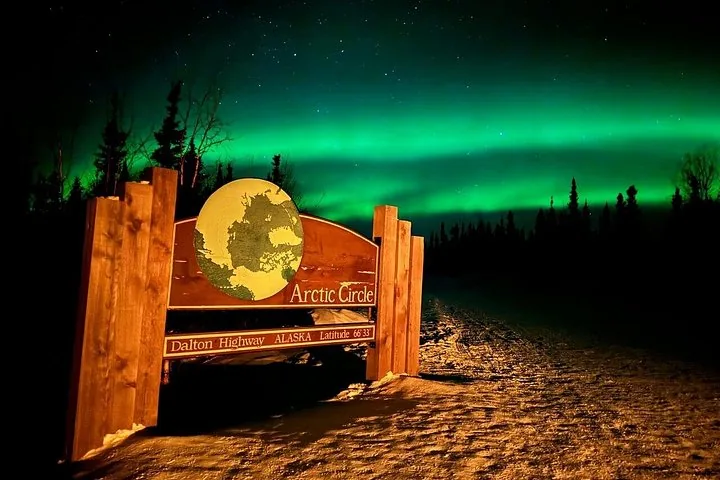
Northern Lights & Arctic Circle Tour
- 4.6/5 (990+ reviews)
- 12 to 14 hours
- Operated by Alaska Wild Lights
Includes Driver-guide from Alaska Wild Lights · Hotel pickup and drop-off within Fairbanks city limits · Personalized Arctic …
You'll choose your date and complete the booking on Viator.
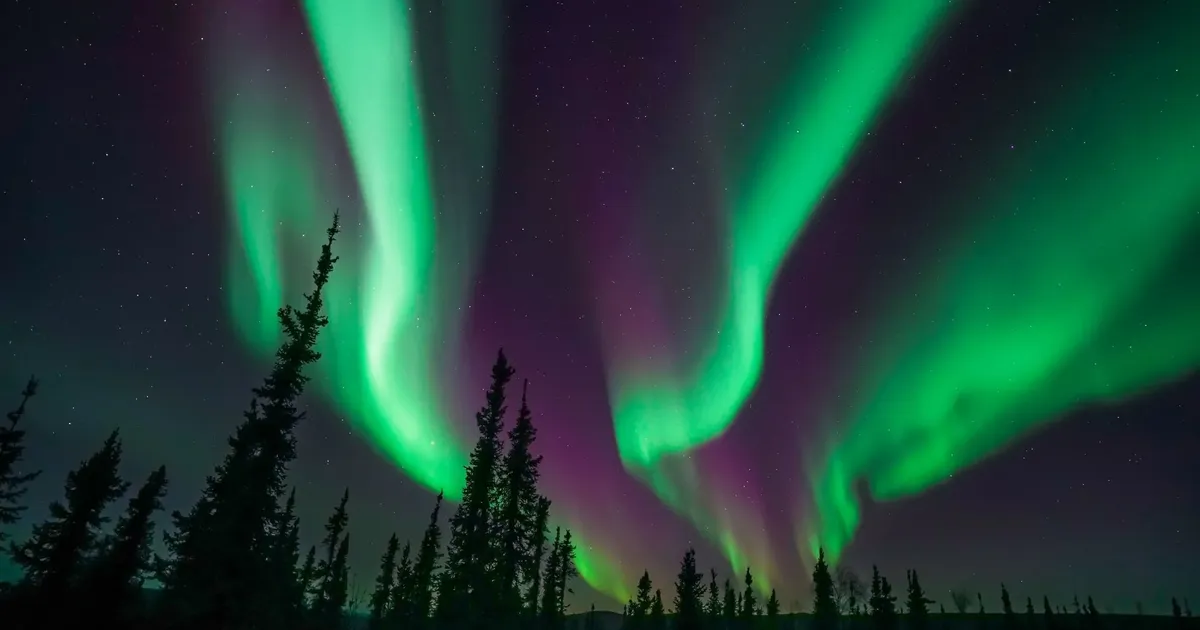
The month matters, but on the night it comes down to three things: clear skies, real darkness and an active aurora. A promising forecast can still end under cloud.
| Your priority | When to go | Why |
|---|---|---|
| Aurora with milder cold | Late August to early October, or March to early April | Close to the equinoxes, when the aurora is more frequent, and less severe than midwinter |
| Longest nights | December to February | Very long darkness, snow on the ground and plenty of winter activities |
| Fall color and the aurora | Late August to September | Dark nights return while the birch and aspen are still yellow |
| Spring aurora and winter activities | March to early April | Dark nights plus longer days for daytime trips |
| Northern lights near Fairbanks | 21 August to 21 April | The local aurora season as Explore Fairbanks gives it |
| Summer trip, almost no aurora | May to July | The sky over Fairbanks stays too bright all night |
If you also want to stand at the Arctic Circle sign, you can join the aurora watch to a drive up the Dalton Highway. Compare the Arctic Circle tours from Fairbanks or go straight to the northern lights and Arctic Circle tours. Which tours run, and whether they stop for the aurora, changes by date.
When is northern lights season in Alaska?
The aurora happens in the upper atmosphere all year, but you only see it against a dark sky. In Alaska’s far north, the long summer daylight keeps the sky too bright for it for several months.
Explore Fairbanks gives the local aurora season as 21 August to 21 April. Travel Alaska, the state’s official visitor site, describes the statewide viewing period as roughly late August to late April. Treat both as planning windows: they tell you when the sky is dark enough. They don’t promise the lights on any given night or at any given place.
Fairbanks sits under the auroral oval, the ring around the pole where displays are most frequent, and its inland position keeps it clear of some of the cloudier coastal weather. If you want a realistic chance without heading into very remote Alaska, Fairbanks is a good base. Our Fairbanks guide covers the town itself, our Fairbanks northern lights guide covers viewing spots and aurora tours near town, and the best time to visit the Arctic Circle guide covers the Dalton Highway trip by season.
Best months to see the northern lights in Alaska
No month is perfect. Cloud can hide a strong aurora, and a clear sky can make a moderate one memorable. Here is what each month gives you around Fairbanks.
| Month | Aurora viewing around Fairbanks | What to expect | What it suits |
|---|---|---|---|
| January | Long dark nights | Deep winter, very cold | Travelers comfortable with serious cold |
| February | Long dark nights | Winter scenery and aurora trips | A dedicated winter trip |
| March | Good, close to the spring equinox | Longer days for sightseeing | Aurora plus daytime tours, with milder cold than midwinter |
| April | Possible in the first half | Daylight grows fast | Early in the month |
| May | Not practical | Nights too bright in Fairbanks | Arctic sightseeing instead |
| June | Not practical | Near-solstice daylight and the midnight sun | Not an aurora month |
| July | Not practical | Long, bright evenings | Scenic Arctic tours |
| August | Possible from about 21 August | Darker nights return late in the month | A late-summer chance |
| September | Good, close to the fall equinox | Fall color and cooler nights | Aurora plus fall scenery, milder than midwinter |
| October | Good, with growing darkness | Colder, first snow possible | A shoulder-season trip |
| November | Long nights | Winter settles in | Winter-focused trips |
| December | The longest nights | Very short days and intense cold | A snowy Arctic setting |
These are planning notes, not probabilities or a forecast for any date. A clear night with moderate activity can beat a very active night hidden behind cloud, so no table can say a future date will deliver.
Other Experiences
Other experiences you might enjoy
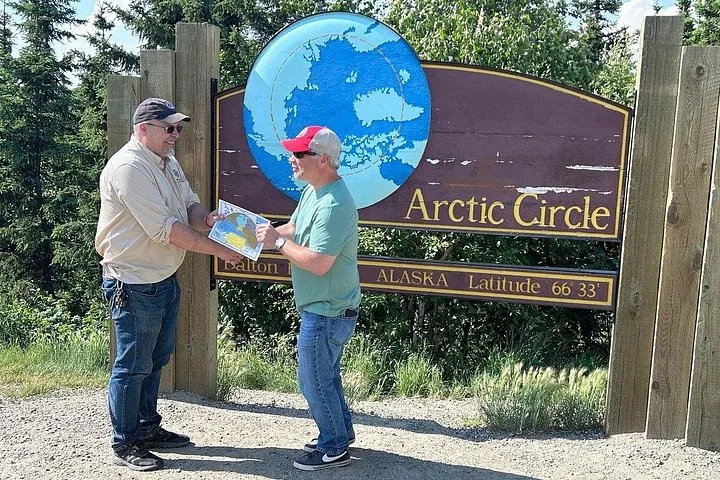
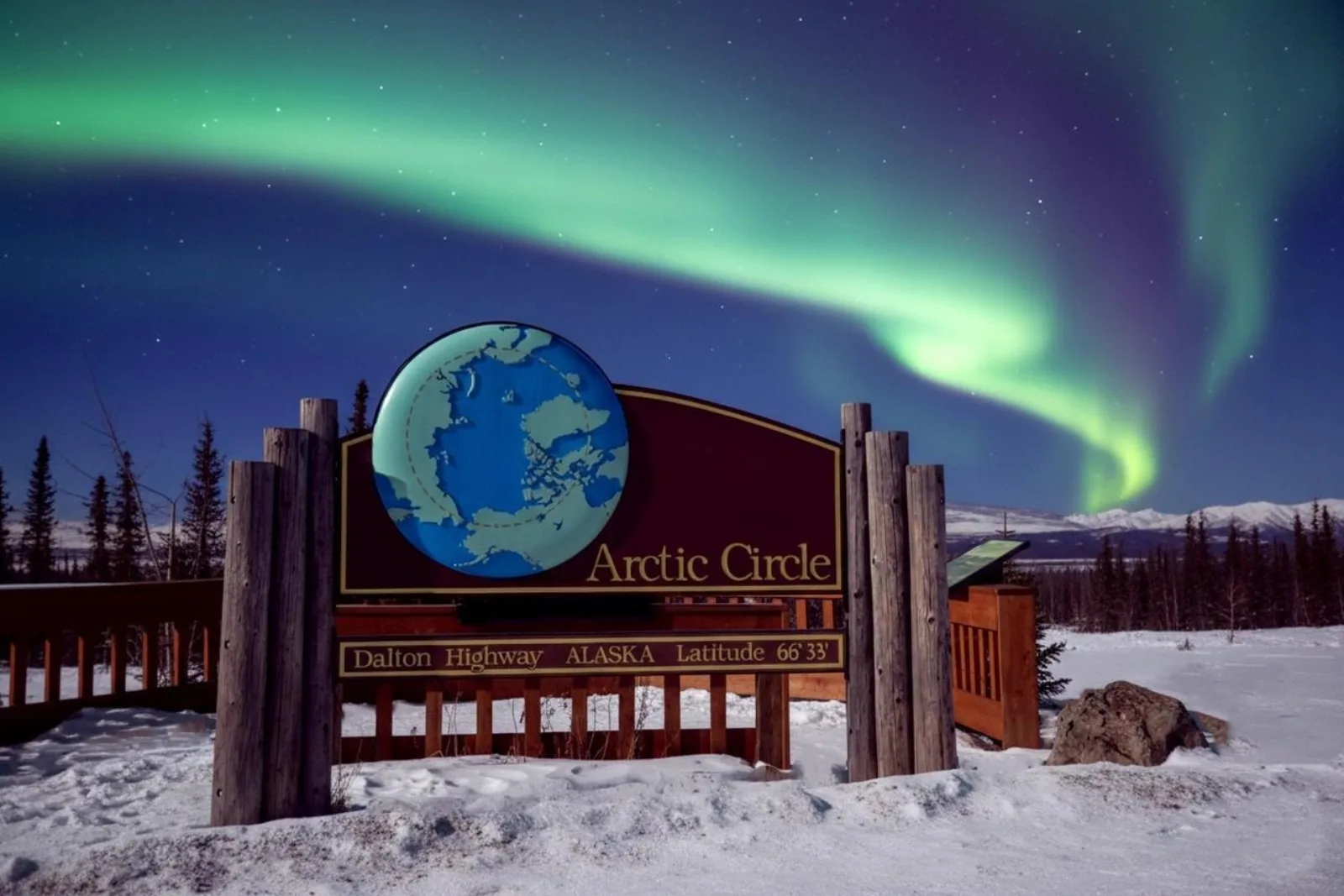
Other ways to watch for the aurora from Fairbanks, from evening chases near town to late-night drives up the Dalton Highway to the Arctic Circle.

Month by month: what each month is like
January: long, dark nights and real Arctic winter
January is one of the darkest months in Interior Alaska, so you get long hours to watch the sky. It is also serious winter. Very low temperatures make warm clothing, reliable transport and a sheltered place to wait more important than in any other month.
A guided night tour is more comfortable than standing beside a road for hours, because you can wait in the vehicle between stops. If you plan to drive the Dalton Highway yourself, expect hard conditions on a remote road.
Best for: winter scenery, sheltered aurora watching and travelers ready for extreme cold.
February: winter activities plus the northern lights
February still has long nights, and the days grow steadily longer, so you can plan winter outings by day and keep your evenings for the aurora.
Around Fairbanks you can add an evening at the hot springs on the Fairbanks: Northern Lights & Chena Hot Springs Tour (4.5/5 from 170+ reviews) or a winter Arctic Circle drive. Don’t fill every night with a long trip: you want a free evening in case the sky is cloudy.
Best for: a balanced Alaska winter trip with several nights of aurora watching.
March: equinox activity and longer days
Aurora activity tends to rise around the spring equinox. The University of Alaska Fairbanks Geophysical Institute notes that the aurora is about twice as likely at the equinoxes as at the solstices, though weather and darkness still matter on each night.
You also get more daylight for sightseeing than in midwinter. That makes March a good fit if you want the northern lights alongside an Arctic Circle trip and some daylight sightseeing.
Best for: first-time aurora travelers, winter photography and combining the aurora with daytime tours.
April: still possible, but go early
Around Fairbanks you can still see the aurora in the first half of April. As the month goes on, the night sky gets brighter, and the Explore Fairbanks season ends on 21 April.
If the aurora is the main reason for your trip, March gives you more dark hours. Early April can still suit you if you want winter outings and long days. After about 21 April, don’t count on a night-time aurora tour being practical.
Best for: an early-April visit with realistic expectations.
May, June and July: don’t plan an aurora trip
Summer nights in Fairbanks are too bright for the aurora. June brings the summer solstice, and the season is known for long daylight. The aurora still happens overhead in these months; you just can’t see it against the bright sky, and a strong forecast won’t change that.
Summer is still a fine time to visit Alaska. It is a good season for scenery and for trips north on the Dalton Highway, but book an Arctic Circle sightseeing tour, not a northern lights tour. The Arctic Circle Day Tour ($335, 4.7/5 from 730+ Viator reviews) runs the whole road in daylight from early May to late August.
For more on the route, see our Dalton Highway tours page and the summer Arctic Circle tours.
August: the season returns late in the month
The first part of August is still too bright in Fairbanks. The local aurora season starts on 21 August.
Late August suits you if you want long days for exploring and a chance of the aurora after dark. You may catch the first fall color in the north. Your dark hours each night are shorter than in fall or winter, though. Our guide to the northern lights in Alaska in August splits the month into early, mid and late August.
Best for: late-summer trips with the aurora as a bonus.
September: aurora with fall color
September is a good month for a first northern lights trip to Interior Alaska. Nights are dark, the fall equinox raises the odds of activity, and the cold is usually less severe than in deep winter. The birch and aspen can still be in color.
The weather is unpredictable. Snow and freezing temperatures can arrive early, especially farther north on the Dalton Highway, so don’t assume fall means easy driving in Arctic Alaska.
Best for: first-time visitors, aurora photography, fall landscapes and a mix of outdoor activities.
October: darker nights and the turn to winter
October brings longer darkness each week and can be good for aurora watching. Fairbanks may already have ice or snow, so pack for cold nights.
A guided trip helps if you don’t want to drive unfamiliar roads after dark. If the northern lights are a priority, give yourself several nights instead of counting on one outing.
Best for: a fall-into-winter trip with plenty of night hours.
November: long nights before the holidays
November has long darkness and the landscape turns fully to winter. It suits you if you want snow and dedicated aurora outings without the holiday crowds.
The drawback is the short daylight for sightseeing, especially on long trips north. Check the departure time and total length before you book an Arctic Circle tour.
Best for: winter trips and night-focused aurora plans.
December: the longest nights
December holds the winter solstice and the year’s shortest days. You get plenty of darkness, but that does not make the aurora more active than in March or September, and it does not guarantee a sighting.
Plan for cold, snow, cloud and remote-road conditions. A tour with a heated vehicle or an indoor place to wait is easier than watching from the roadside on your own.
Best for: travelers who want the full Alaskan winter and don’t mind very short days.
Is September or March better for the northern lights in Alaska?
Both work. Choose September for fall scenery and less severe cold; choose March for snow, winter activities and longer days. Both months sit close to an equinox, when aurora activity tends to be higher.
| Factor | September | March |
|---|---|---|
| Landscape | Fall color, early snow possible | Snow and settled winter scenery |
| Darkness | Strong, growing through the month | Strong, shrinking through the month |
| Typical trip | Fall sightseeing and aurora nights | Winter outings and aurora nights |
| Road north to the Arctic Circle | Variable; early snow possible | Winter conditions; leave the driving to a tour |
| Suits | A fall Alaska trip | A winter Arctic trip |
No one can name a single week as the year’s aurora peak. Pick dates that suit the rest of your trip, then watch the weather and the short-range aurora forecast as you get close.
Which month should you choose for Fairbanks?
Match the month to the trip you want around the aurora:
- Milder cold with equinox activity: September or March, weather and your cold tolerance allowing.
- Deep-winter scenery: December to February.
- Fall color: late August to September.
- Long dark evenings without the very shortest days: October or February.
- No aurora: May, June and July.
People often ask whether March beats September, or February beats December. For a particular trip, no one can say: the cloud on your actual dates usually matters more than the month.
Common mistakes when choosing a month
Assuming more darkness means a sighting. Darkness makes viewing possible, but whether you see anything still depends on cloud and aurora activity.
Planning only one night. Three or four nights give you a buffer against bad weather.
Choosing June or July because Alaska is so far north. The aurora is still there; the bright summer sky hides it.
Forgetting how cold it gets while you wait. A 20-minute photo stop and two hours outside at night need different clothing.
Treating every northern lights tour as the same trip. Lodges, mobile chases, photo tours and full-day Arctic Circle drives differ a lot in length, comfort and goal.
What time of night is best to see the aurora in Alaska?
In Interior Alaska, plan on roughly 9 p.m. to 3 a.m. The University of Alaska Fairbanks Geophysical Institute points to the three or four hours around midnight as the most promising. Strong displays can start earlier or run later.
Three things matter more than the clock:
- Darkness: the sky must be dark enough.
- Cloud cover: a strong aurora above thick cloud is invisible.
- Aurora activity: the lights vary a lot in strength, timing and position.
A clear night with moderate activity can beat a cloudy night with a high forecast. Many Fairbanks operators plan around 10 p.m. to 2 a.m., the core of that window; if the sky is dark and clear outside those hours, stay out anyway.
Before you go out:
- Check the aurora forecast for activity.
- Check the cloud cover and local weather, not just the Kp number.
- Look at the Aurora Tracker for local guidance.
- Pick a safe spot with a wide, dark view to the north.
- Allow time to wait: the aurora often comes in waves.
Fairbanks can see the aurora at activity levels too low for places farther south.
For current conditions, check the University of Alaska Fairbanks aurora forecast and the Explore Fairbanks Aurora Tracker. The university’s three-day forecast is more dependable than its longer outlook.
Does the moon affect northern lights viewing?
A bright aurora stays visible under moonlight. The moon can wash out faint detail, but it also lights up the snow and the landscape, which helps many photos. Don’t cancel an otherwise promising trip because the moon is nearly full.
If you want to photograph faint aurora against a very dark sky, check the moon phase along with the cloud forecast. It is a secondary factor; cloud and activity matter more.
Where in Alaska should you go for the northern lights?
If the northern lights are the center of your trip, Fairbanks is one of the most practical bases: it sits under the auroral oval, has an inland climate and has plenty of aurora tours.
Other options:
- Coldfoot and the Brooks Range: remote and very dark, about 259 road miles north of Fairbanks, usually reached on a guided trip.
- The Denali area: wide Interior landscapes, with aurora chances when the nights are dark and clear.
- Anchorage and Southcentral Alaska: sightings happen, but the aurora is overhead less often than around Fairbanks.
- Other remote Arctic communities: potentially dark, clear skies, but hard transport and few visitor services.
Going farther north does not guarantee a better view. Cloud and a clear horizon matter more. You can see a strong display just outside Fairbanks without a long drive to the Arctic Circle.
Around Fairbanks itself, get away from the city lights but keep the access safe. Cleary Summit, about 20 miles north, Chena Lake Recreation Area near North Pole and Tanana Lakes Recreation Area on the south side of town are common choices, along with higher ground such as Murphy Dome. Whether a spot makes sense on the night depends on the weather, snow, road access and parking. A guided tour helps if you don’t want to drive icy roads at night: some wait at a single lodge, others move between spots to find a clear sky, and the two are different trips.
Our guide to where to see the northern lights in Alaska compares the places in more detail.
Should you book a northern lights tour or an Arctic Circle tour?
The two are related, but you can’t swap one for the other.
A dedicated northern lights tour spends its time where and when the sky is dark and clear. A daytime Arctic Circle tour is about the drive north: the Dalton Highway, the Yukon River and the Arctic Circle crossing. A combined Arctic Circle and northern lights tour is a long road trip north with aurora stops on the way back, weather permitting.
| Trip | Why you’d book it | Trade-off | Our pick |
|---|---|---|---|
| Northern lights viewing tour | Your top goal is to see or photograph the aurora | No guaranteed sighting, and usually no Arctic Circle crossing | Northern Lights Tour with Free Photos, 4.8/5 from 290+ reviews |
| Arctic Circle day trip | You want the crossing and the northern scenery | A daytime summer trip, not an aurora outing | Arctic Circle Day Tour, $335, 4.7/5 from 730+ reviews |
| Arctic Circle and northern lights trip | You want both in one outing | A very long day, with no promise of an aurora | Northern Lights & Arctic Circle Tour, $363, 4.6/5 from 990+ reviews |
| Arctic fly-drive or overnight trip | You want to reach more remote Arctic places | Usually costs more and depends more on weather and seats | Compare them on our fly-drive tours page |
You don’t have to cross the Arctic Circle to see the northern lights; Fairbanks already sits under the auroral oval. The drive north gives you a very dark setting, Arctic scenery and the sign, at the cost of more hours on a remote road and often harsher weather. Book it if the journey appeals to you for its own sake. In summer the drive is still a good trip, but it is not an aurora trip.
If you have only one free night and the aurora is the goal, a dedicated aurora outing gives you more flexibility. If crossing the Arctic Circle is a must, a combined tour saves a night, but the driving schedule limits where and how long it can stop for the lights.
Tours to compare
These are live marketplace listings, not a promise of dates or seats. Check the current itinerary, season, cancellation terms and inclusions before you book.
1. Northern Lights Tour with Free Photos - Arctic Night Tours (GetYourGuide) A Fairbanks aurora chase with hotel pickup, rated 4.8/5 from 290+ reviews. The guide picks the route and distance on the night to find a clear sky and takes your photos. It suits you if seeing and photographing the lights is the main goal.
2. Northern Lights & Arctic Circle Tour (Viator) Alaska Wild Lights collects you from your Fairbanks hotel for a 2 p.m. departure up the Dalton Highway to the Arctic Circle sign, then watches for the aurora on the drive back. It takes 12 to 14 hours and costs $363, rated 4.6/5 from 990+ reviews. The lights are not guaranteed.
3. Arctic Circle Day Tour (Viator) The same operator’s summer daylight run to the sign, about 13 hours for $335. Book it if you want to cross the Arctic Circle and see the road north, with no aurora in the plan. Our Dalton Highway page compares the other trips on that road.
4. Aurora Viewing - Aurora Husky Lodge (Viator) About five hours at a ridge-top lodge, with pickup from some Fairbanks hotels, for $136; rated 4.6/5 from 300+ reviews. You wait in the warm and step out when the sky lights up, which suits first-time visitors, anyone wary of standing outside for hours and travelers without a car. Check the pickup area and the weather refund terms before you pay.
5. Incredible Aurora Viewing Adventure (Viator) A mobile aurora chase with hotel transfers and photos, rated 4.8/5 from 810+ reviews. A moving itinerary lets the guide drive away from local cloud; it still can’t promise a display. Read the listing’s retry or refund conditions.
6. 1 Day Shared Tour Arctic Circle and Aurora Viewing in Alaska (Viator) About 12.5 hours up the Dalton Highway to the Arctic Circle sign, with an aurora stop on suitable departures, for $329; rated 4.5/5 from 78 reviews. The listing has more than one option, and the aurora-only option doesn’t go to the Circle, so check that the one you pick includes the Arctic Circle.
How many nights should you spend in Fairbanks for the northern lights?
Plan at least three nights if you can; four or five give you more room. Several nights let you work around cloud and give you more chances at an active sky.
Explore Fairbanks reports that visitors who stay at least three nights during the season and go out actively looking have a better than 90% chance of seeing the lights. That is a regional figure; it can’t guarantee your trip.
A simple three-night plan:
- Night 1: a dedicated aurora outing away from the city lights.
- Day 2 / Night 2: rest, daytime Fairbanks activities and a second look at the sky.
- Day 3 / Night 3: an Arctic Circle trip if the schedule and weather allow, or a spare aurora night.
Book your first guided outing early in the stay, so the later nights stay free if the first is cloudy, and don’t take a long highway trip the day you land. With five nights, spread the daytime trips between aurora nights instead of stacking several late nights in a row. Our things to do in Fairbanks guide has ideas for the days in between.
What should you wear for aurora viewing in Alaska?
Nights outdoors feel much colder than daytime sightseeing, because you stand still for long stretches. Dress in layers for the forecast and follow your tour operator’s advice:
- Thermal base layers and warm mid-layers.
- An insulated winter jacket and insulated outer pants.
- Warm boots with room for thick socks.
- A hat, neck gaiter and insulated mittens or gloves.
- Hand warmers and spare warm layers when it is very cold.
- Thin liner gloves under the mittens, so you can work a camera.
- Spare phone and camera batteries: cold drains them fast.
Ask whether your tour provides extra cold-weather gear, a heated indoor space, hot drinks or a ride back to your hotel. Don’t assume any of these are included. Our what to wear guide has the full packing list.
If you drive in remote areas yourself, winter emergency gear becomes much more important. The Bureau of Land Management warns that winter driving on the Dalton Highway can be very difficult because of ice and blowing snow.
How to improve your chances of seeing the northern lights
- Base yourself well. Fairbanks is a good default for an Alaska aurora trip.
- Allow several nights. More nights out matter more than picking one perfect date.
- Check both the cloud and aurora forecasts. They answer different questions; read them together.
- Get away from bright lights. Pick a safe spot with a clear view of the northern sky.
- Stay up around midnight. Don’t book early-morning activities that make it impossible to stay awake.
- Keep some flexibility. One evening can be much clearer than the next.
- Match the tour to your goal. Book a dedicated aurora outing if the lights come first; choose a combined Arctic Circle tour if the drive matters just as much.
Frequently asked questions
What is the single best month to see the northern lights in Alaska?
No single month is the best. March and September sit close to the equinoxes, when the aurora is more frequent, and they are milder than midwinter. December to February have the longest dark nights but are much colder, and not necessarily clearer on any given night.
Can you see the northern lights in Alaska in October?
Yes. October is inside the Fairbanks aurora season and has plenty of darkness. Expect snow, ice and quickly changing weather.
Can you see the northern lights in Alaska in December?
Yes. December has long dark nights and can give good viewing. Very cold temperatures and cloud can get in the way, and no sighting is guaranteed.
Are the northern lights visible in Alaska in summer?
Usually not around Fairbanks in May, June and July, because the sky never gets dark enough. Viewing becomes practical again from 21 August.
Is Fairbanks or Anchorage better for the northern lights?
Fairbanks is usually the better base for a dedicated aurora trip. It sits near the auroral oval and has many tours built around the northern lights. Anchorage gets the aurora too, but you need a stronger display and good local conditions to see it there.
What time do the northern lights appear in Fairbanks?
They can appear at any hour of darkness, but 9 p.m. to 3 a.m., and especially the hours around midnight, is a useful window. Check the current forecast and the local sky.
Can you see the northern lights from the Arctic Circle in Alaska?
Yes, when the sky is dark and clear and the aurora is active. The Arctic Circle sign is not a guaranteed viewing point, and driving north of Fairbanks does not remove the risk of cloud.
Is an Arctic Circle northern lights tour worth it?
It is if you want the Dalton Highway and the Arctic Circle crossing as well as a chance at the aurora. Combined tours run from 12 to 19 hours, depending on the operator. If you only want to see the lights, a shorter aurora outing from Fairbanks uses your time better.
Is March better than December for the northern lights in Fairbanks?
March is often the easier trip: plenty of darkness, more daylight for activities and the spring equinox close by. December gives you longer nights and a deep-winter setting. The cloud on your actual dates can matter more than the month.
Can you see the northern lights in Fairbanks in September?
Yes. September sits well inside the Fairbanks season and suits visitors who prefer fall conditions to midwinter cold.
Can you see the northern lights in Fairbanks in August?
Usually only late in the month, from about 21 August, when the nights get dark again. Early August is too bright. Our August aurora guide covers the dates and tours.
Can you see the northern lights in Fairbanks in April?
Yes, especially early in the month. The local season ends around 21 April, when the nights get too bright.
How many nights in Fairbanks are enough for the northern lights?
Plan at least three nights if the aurora is a main reason for the trip; four or five give you more room. No length of stay guarantees a sighting.
Can you see the northern lights from a Fairbanks hotel?
Sometimes, if the sky is dark and lights, buildings or trees don’t block your view. Hotels outside the brightest parts of town have a better chance, but no hotel can promise a sighting.
Should I book a guided northern lights tour or drive myself?
A guided tour is easier if you don’t know snowy roads, want to stay out late or want a heated place to wait. Driving yourself can work if you are prepared for winter roads and use safe, easy-to-reach viewing spots.
Does a full moon ruin northern lights viewing?
No. A bright aurora stays visible, and moonlight lights up the snow and scenery. A dark, moonless sky helps with faint displays and some kinds of photography.
When should you go?
For a first northern lights trip to Alaska, late August to early October or March to early April give you long dark nights with less severe cold than midwinter, plus the equinox lift in activity. For a snowy winter trip, December to February give you the longest nights. Whatever you choose, stay long enough for several chances and keep your plans loose around the weather. Our first Alaska northern lights trip guide sets out three-, five- and seven-day plans.
If you also want to stand at the Arctic Circle sign, pair the aurora with a guided trip north from Fairbanks. Compare the Arctic Circle tours from Fairbanks, read how to get from Fairbanks to the Arctic Circle, or look at the northern lights and Arctic Circle tours before you choose. Check your exact dates on the listing, because winter schedules can change.
Sources
Official sources checked on 27 October 2026:
- University of Alaska Fairbanks Geophysical Institute: aurora forecast and FAQs: season, equinox effect, viewing hours and forecasts.
- Explore Fairbanks: aurora season: the 21 August to 21 April season and the three-night figure.
- Explore Fairbanks: Aurora Tracker: activity, weather and daylight in one place.
- Travel Alaska: the science behind Alaska’s northern lights: the statewide season and the equinoxes.
- Travel Alaska: northern lights viewing: regions and darkness.
- Bureau of Land Management: Dalton Highway FAQs: winter driving and services.
Stand at 66°33′ North This Season
A day on the Dalton Highway, the Arctic Circle sign after dark and a watch for the aurora on the long drive home.
Check Availability & Book