What to Wear on an Arctic Circle Tour
Layering for a winter Arctic Circle tour, summer rain and mosquito kit, boots for icy waysides, and what the Fairbanks operators do and do not supply.
Wear layers you can peel off in a heated van and pile back on at every stop: in winter a wool or synthetic base layer, a fleece or down mid-layer, an insulated parka, a hat over your ears, mittens and insulated boots with grip; in summer a rain shell, a warm fleece for the late return, waterproof shoes and a head net for mosquitoes. The operators running Alaska Arctic Circle tours from Fairbanks supply the van, the guide and usually hot drinks, but not your clothing.
Check Availability
How cold it gets on a winter tour
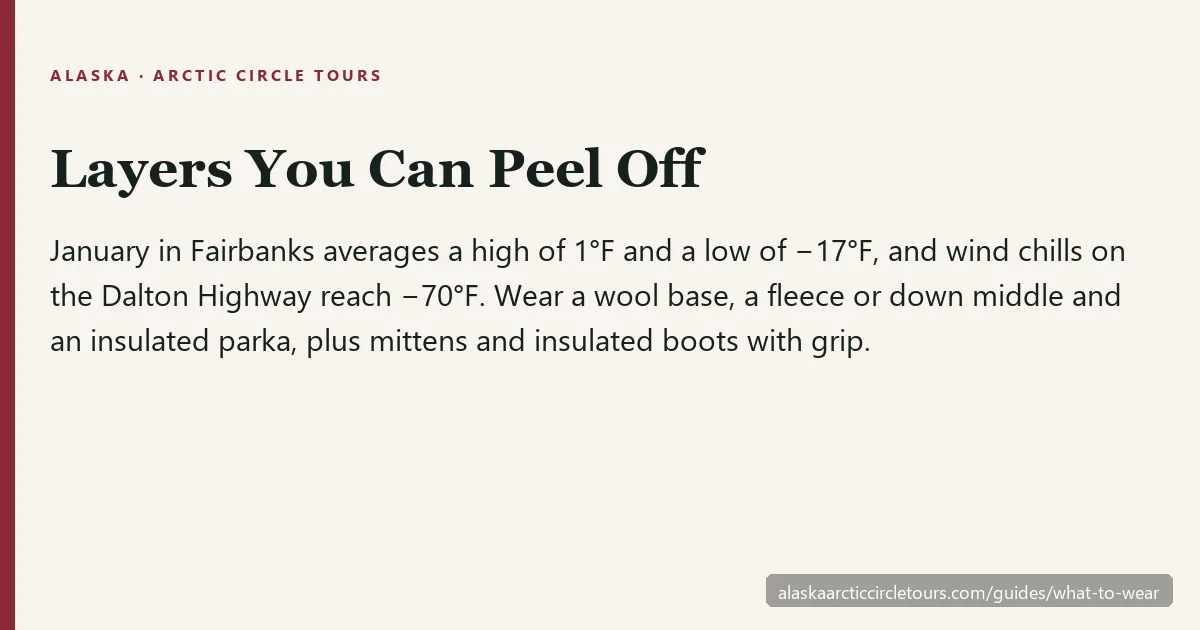
NOAA’s current normals for Fairbanks International Airport put the average December high at 4°F and the low at −13°F, and January is colder still, with an average high of 1°F and a low of −17°F. North of the Yukon River the numbers fall further: winter lows along the Dalton Highway commonly sit in the −20s to −40s°F, and the BLM warns of wind chills down to −70°F.
Wind is what turns a cold stop into a dangerous one. On the National Weather Service chart, −20°F with a 10 mph breeze already feels like −34°F, a level at which exposed skin can freeze in 10 to 30 minutes. Finger Mountain is a high, exposed ridge where the BLM tells visitors to expect strong winds, and the Arctic Circle wayside is an open clearing. Northern Alaska Tour Company’s listings put a stop at least every two hours, so you switch between a warm van and the cold several times a day.
| Month | Fairbanks normal high | Fairbanks normal low | What that means for your bag |
|---|---|---|---|
| October | 34°F | 18°F | Full winter layers by the evening return |
| November | 12°F | −4°F | Parka, insulated boots, mittens |
| December | 4°F | −13°F | Every layer you own, plus warmers |
| January | 1°F | −17°F | Every layer, face and neck covered |
| February | 12°F | −11°F | Every layer, plus warmers |
| March | 25°F | −3°F | Full winter kit; days feel milder than nights |
| April | 46°F | 22°F | Winter layers for the night, lighter for the day |
| June–July | 72–73°F | 50–53°F | Rain shell, fleece, bug protection |
| September | 55°F | 36°F | Warm jacket, hat and gloves for the night |
Those are town figures. The road north is usually colder, and aurora tours have you standing outside around midnight.
The winter layering system
Explore Fairbanks gives the rule locals follow: wear as many layers as you can without sweating, because damp fabric chills you as soon as you step back outside.
Start with a base layer of merino wool or synthetic fabric, top and bottom. Add a mid-layer of fleece, down or synthetic fill, ideally one with a full zip so you can open it inside the van without taking it off. Over that goes a well-insulated parka, preferably waterproof, that covers your hips. Insulated trousers go over the base layer. Explore Fairbanks also says to avoid cotton, tight clothing and outer layers that let in moisture.
Choose a hat that fully covers your ears, a scarf or neck gaiter you can pull over your nose, wool socks, and mittens, which are warmer than gloves. Keep a pair of chemical hand and foot warmers in a pocket for the aurora stop. Thin gloves under the mittens let you work a camera briefly.
Bring spare batteries. Explore Fairbanks notes that batteries die quickly in the cold, and Apple rates iPhones for 32°F to 95°F, warning that a phone used colder than that may shut down until it warms up. Keep your phone and a power bank in an inside pocket.
Other Experiences
Other experiences you might enjoy
More ways north from Fairbanks: winter drives and aurora tours to the Arctic Circle sign, and summer day trips on the Dalton Highway.
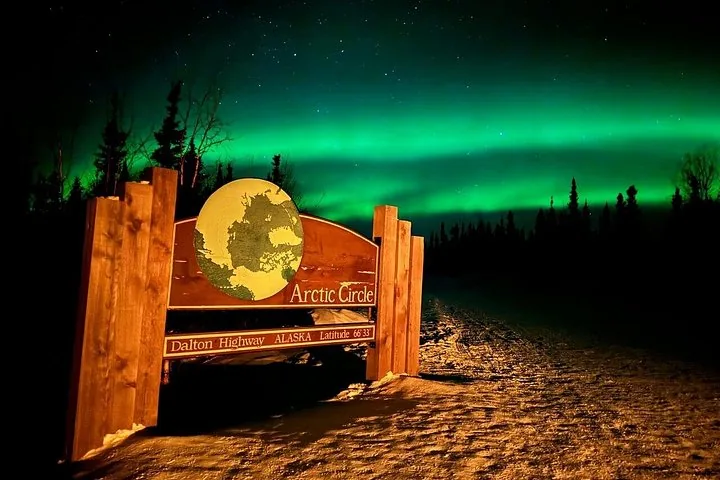
Summer: rain, mosquitoes and late, cool evenings
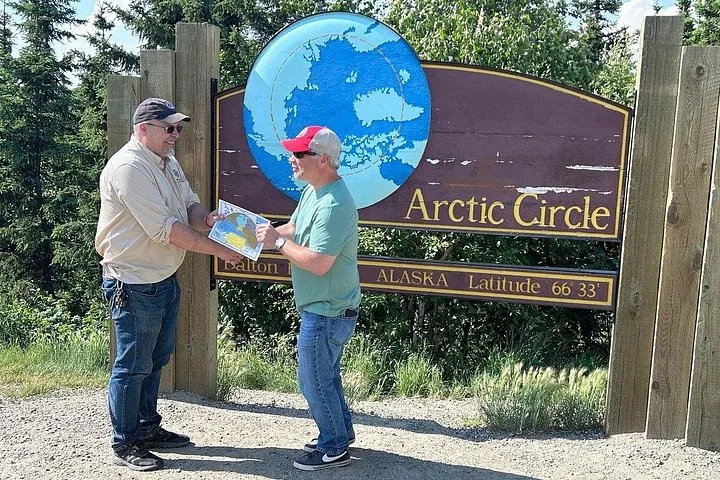
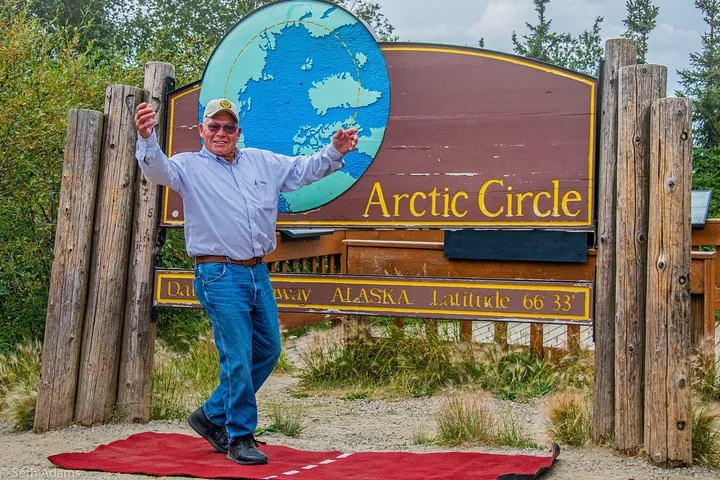
A summer trip needs far less. Fairbanks averages a high of 72°F in June and 73°F in July, yet Coldfoot, farther north, averages highs in the 50s, and the BLM notes that thunderstorms are common in early summer between Fairbanks and the Yukon River. Alaska Wild Lights tells guests on its Arctic Circle Day Tour that the weather changes quickly, that rain is always possible, and recommends sturdy shoes and a rain jacket.
Pack a waterproof shell, a fleece and a warm hat for the late return. By September Fairbanks lows average 36°F, and the BLM notes frosty nights on the Dalton from mid-August.
Insects decide comfort more than temperature from mid-June. The BLM says mosquitoes emerge in mid-June and last into August, with biting flies and gnats into September, and it recommends DEET repellent and a head net. On a still day at the tundra stops you will be glad of both. Our summer Arctic Circle tours page lists which trips run in which months.
Footwear for gravel, ice and tundra
In winter, Explore Fairbanks recommends insulated boots with traction. The parking areas and gravel paths at the waysides lie under snow, often in the dark. A grippy sole or slip-on traction cleats keep you upright between the van, the sign and the wooden observation deck.
In summer, waterproof hiking shoes or light boots are enough. The ground at Finger Mountain, where the BLM maintains a half-mile interpretive trail across the tundra, can be soft and wet, and in summer a short path leads down to the riverbank viewing decks at the Yukon River. Wear shoes you already know; the day lasts 12 hours or more.
What the operators supply, and what they leave to you
None of the tours on this site lists a parka, boots or snow suit as an inclusion, and several say so directly. Read your own tour’s page before you pack.
| Tour | What the listing says about clothing |
|---|---|
| Northern Lights & Arctic Circle Tour | Cold-weather gear excluded; dress in layers for extreme winter temperatures. Tea and coffee included. |
| Arctic Circle & Northern Lights Dalton Highway Tour | Winter clothing and cold-weather gear excluded. Hot drinks included. |
| Arctic Circle & Dalton Highway Scenic Journey | Clothing for variable summer weather excluded. |
| Arctic Circle Winter Drive Adventure and the other Northern Alaska Tour Company drives | Operates in all weather; guests are asked to dress appropriately. No gear in the inclusions. |
| Arctic Circle Day Tour (summer) | Sturdy shoes and a rain jacket recommended. |
Explore Fairbanks suggests asking each tour what gear it supplies. One direct-booked private operator, Basecamp Adventures, lists a snow suit with its Arctic Circle trip. Otherwise, bring your own or ask your operator when you book.
Frequently asked questions
What should I wear in the Arctic?
Wear three layers: a wool or synthetic base, a fleece or down middle, and an insulated, preferably waterproof parka, plus a hat over the ears, mittens and insulated boots with traction. Avoid cotton, which holds sweat and chills you. In summer, swap the parka for a rain shell and a fleece.
What should I pack for an Arctic Circle day trip?
Pack ID, money for meals, water, snacks, a phone with a spare battery, and clothing for the coldest stop of the day. In winter add hand warmers and a headlamp; in summer add insect repellent and a head net. Most tours are 12 to 19 hours long, so pack for the return as well as the morning.
Do you need winter boots for the Arctic Circle in summer?
No. Waterproof hiking shoes or light boots handle the summer stops, including the tundra trail at Finger Mountain. Bring a warm layer for the late return, since September nights in Fairbanks average 36°F and frost can arrive on the Dalton by mid-August.
How cold is Fairbanks in December?
NOAA’s 1991–2020 normals give Fairbanks an average December high of 4°F and an average low of −13°F. The road north is usually colder, and wind on exposed ridges such as Finger Mountain makes it feel colder again.
How do you dress for the northern lights in Fairbanks?
Dress for standing still in the dark at the coldest hour. Aurora watching happens around midnight, so wear every layer, insulated boots, a hat, a neck gaiter and mittens, and keep warmers and spare batteries in your pockets. A thin glove under the mitten lets you use a camera briefly.
Ready to book?
Once your layers are sorted, pick a date. Our winter Arctic Circle tours page sets out the cold-season trips, the northern lights tours page covers the ones that wait for the aurora, and the winter vs summer guide helps if you have not chosen a season yet. You can also compare every tour on the homepage.
Stand at 66°33′ North This Season
A day on the Dalton Highway, the Arctic Circle sign after dark and a watch for the aurora on the long drive home.
Check Availability & Book